Thought leadership
Renewables' countdown to 2027: the cliff and the ROCs
Renewable generators exiting the RO scheme can reduce wholesale market risk, secure stable pricing and take control through the UrbanChain operating system.

31 Jul 2026
Over the cliff-edge, the jagged rocks of the wholesale market await.
In less than a year, 5.1 GW of renewable power generation will age out of Renewable Obligation (RO) subsidy. Over the cliff-edge, the jagged rocks of the wholesale market await. But there is an alternative renewable energy market.
UCL researchers estimate 5.1 GW of renewable assets will age out of their RO subsidies by March 31st, 2027 – about 8% of the UK’s total renewable capacity (as of September 2025).
What happens then? Some may close, others may repower and qualify for new CfDs (Contract for Difference), others may be offered government support (e.g. Drax’s biomass, which has already negotiated a post 2027 CfD).
The rest? They’ll be faced with volatility of the wholesale market, unless they can find an alternative.
Post-subsidy peril for UK renewable generators
The ROC scheme was launched in 2002 to support the UK’s nascent renewable with financial support for at least 20 years. It worked by issuing generators a Renewable Obligation Certificate for every megawatt-hour (MWh) of eligible power they produced, which retailers could then buy alongside wholesale power to demonstrate they had ‘bought’ a MWh of renewable energy. On their end, energy retailers were incentivised to source an increasing percentage of power from renewable sources by obtaining sufficient ROCs. This gave early renewable projects a vital additional revenue stream on top of the wholesale price they received through energy sales.
However, the scheme closed to new projects in 2017, and for many, the financial support is beginning to expire.
That’s a big deal for those renewable projects, their owners and operators, and their buyers as well the UK as a whole – 5.1 GW is about 8% of current renewable power generation.
What’s a renewable generator to do?
Approaching the cliff edge, these projects have limited options.
Many will likely look to ‘repower’ – upgrading or replacing old assets with modern, more efficient technology. This could be financially supported by bidding into upcoming CfD auctions, securing a fixed price for their output going forwards, making repowering financeable.
Some may choose to simply sell power into the wholesale market and take their chances – but would face a high degree of uncertainty at times – as we’ve seen recently – where the power market is volatile.
Alternatively, they may seek to sign PPAs. This has the advantage of price certainty, but introduces an aspect of counterparty risk, and projects exiting the ROCs scheme may not have a strong negotiating hand to play versus corporates with a range of options.
The new way to sell renewable energy
Fortunately, there is another option that has emerged in recent years – a timely development for projects facing the ROCs cliff-edge.
UrbanChain has built an energy operating system - a renewable energy market that directly connects renewable energy generators around the country with large energy users looking to procure green energy.
Generators can pre-agree prices with buyers, yielding many of the stability benefits of a PPA, but coupled with access to a wide pool of buyers. For their part, buyers get to directly procure renewable energy (instead of relying on certificates) with crystal clear, granular traceability.
Not only does this avoid exposure to the wholesale market and its volatility, it offers long-term price certainty, helps avoid curtailment costs (by matching with local sources of demand), and can even provide a better price by cutting out middlemen.
UrbanChain is building an alternative renewable energy market infrastructure that offers a better deal for renewable generators – exactly what’s needed for early renewable projects which don’t or can’t opt for repowering and CfDs.
And it’s not a proof-of-concept or prototype – major generators, such as Centrica, are already selling into the UrbanChain marketplace today.
If your project is approaching the ROC cliff-edge, why not speak to one of our experts and see what’s possible.
Key takeaways
What happens to renewable projects when their RO scheme eligibility expires? They will lose the revenue stream provided by ROCs and have to rely on selling at volatile wholesale market prices – unless they can find an alternative.
What options do renewable generators have once they exit the RO scheme? Some may look to repower, perhaps bidding for new CfDs to finance the upgrade. Others may seek to sign PPAs directly with buyers. But UrbanChain offers a new way to sell renewable energy that avoids the wholesale market, locks in stability, and offers competitive rates.
What makes UrbanChain different? UrbanChain’s marketplace directly matches buyers and sellers of renewable energy – no exposure to the wholesale market and no certificates required. Prices can be agreed in advance, locking in stability and giving greater control. What’s more, by reducing middlemen involvement and emphasising local matching where possible, UrbanChain keeps costs low – which translates to competitive rates for buyers and sellers alike.
FREE YOUR ENERGY.
See how UrbanChain's renewable energy operating system delivers stable, traceable power - built for serious operations.
News
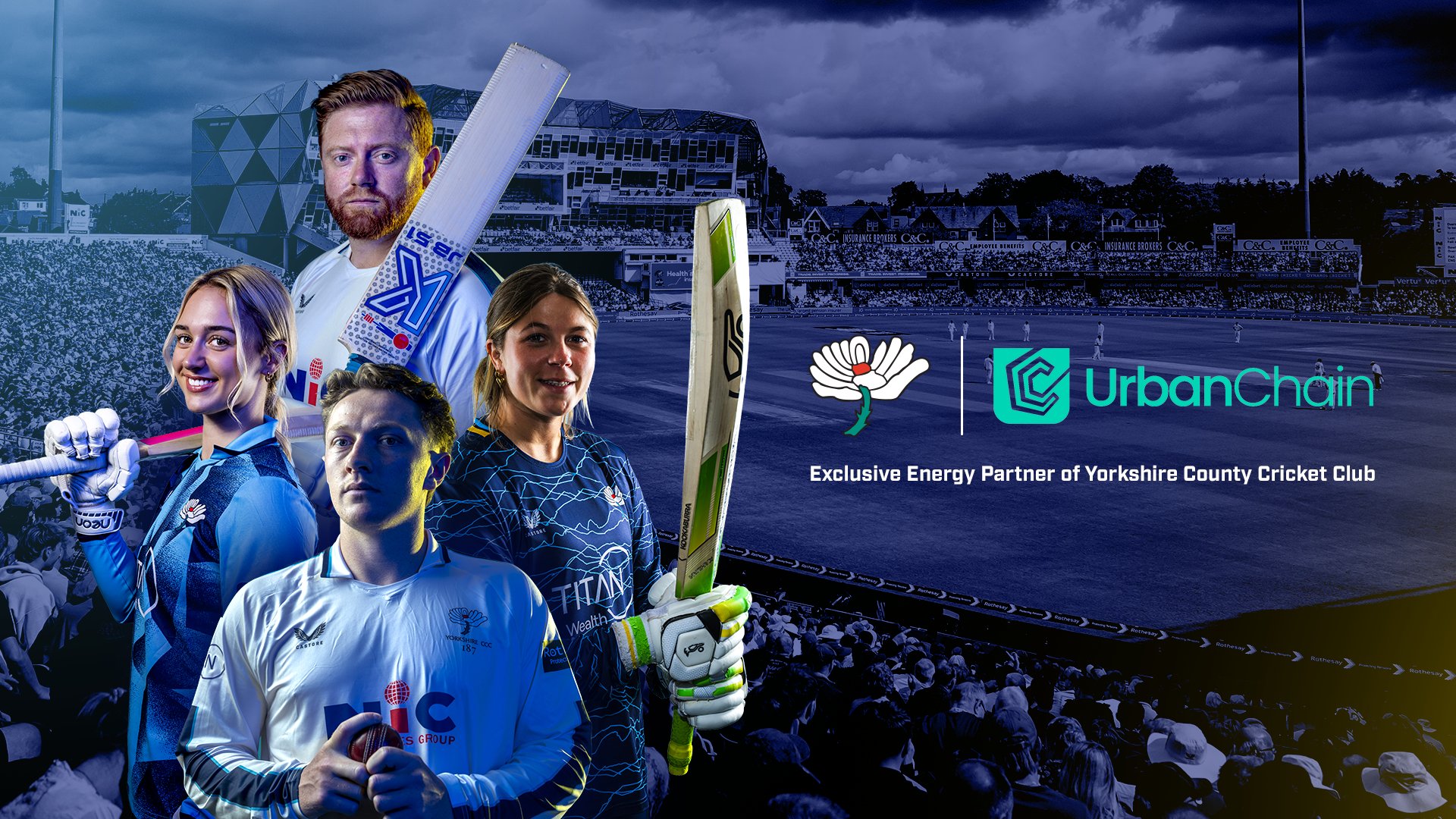
Yorkshire Cricket and UrbanChain partner to power Headingley with renewable energy
UrbanChain becomes Yorkshire County Cricket Club's exclusive energy partner, with Headingley to be powered by 100% renewable energy from January 2027.

Thought leader
Is your energy contract up for renewal this autumn? Five questions to ask before you sign
Five questions to ask before signing your next energy contract this autumn, from wholesale exposure to how renewable power is sourced.

Thought leader
Think a fixed-price energy contract lets you escape wholesale volatility? Think again.
Discover what fixed-price energy contracts and PPAs really protect against, and where wholesale-market exposure can remain.